
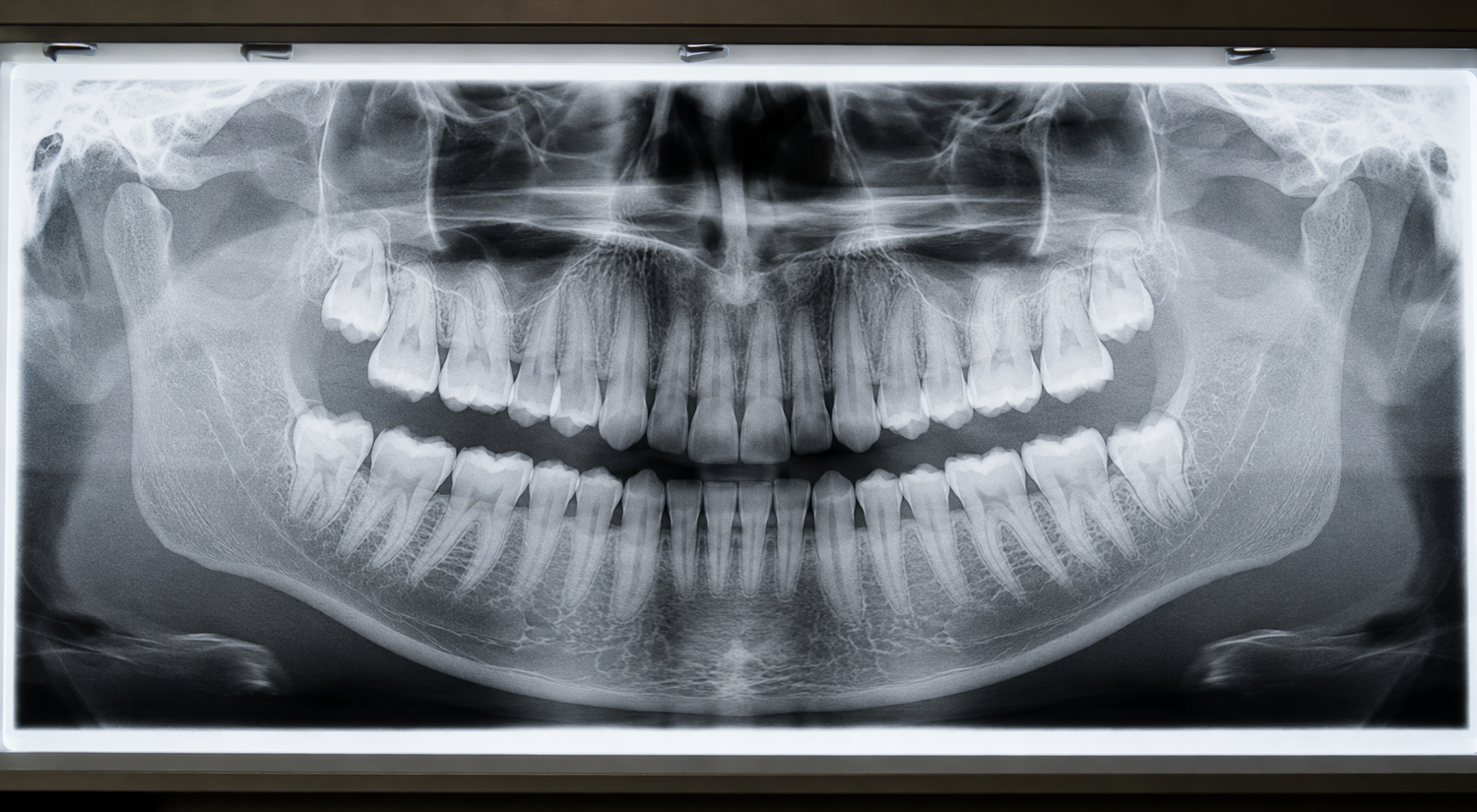
A full set of adult teeth totals 32. But if your wisdom teeth were removed or never came in, 28 is completely normal. The number that truly matters is the one your dentist says keeps your smile healthy.

The Short Answer
You’ve probably heard that adults have 32 teeth. According to human anatomy, the permanent dentition does indeed consist of 32 teeth — 16 in the upper jaw and 16 in the lower jaw. A detailed anatomical review confirms that these 32 teeth are divided evenly across the maxillary and mandibular arches.
But here’s the part many people find confusing: a huge portion of adults walk around every day with just 28 teeth. The missing four are usually the third molars — better known as wisdom teeth. These back-of-the-mouth latecomers are often extracted because they cause problems, or they never develop at all. So if you’ve counted 28, you’re not alone — more on that in a moment.
Before the permanent set arrives, children have 20 primary (baby) teeth, which begin to appear around six months and are gradually replaced by adult teeth starting around age six. Once that process is complete, the adult mouth settles into one of two normal counts: 32 on paper, and often 28 in everyday life.
A Tooth-by-Tooth Tour of Your Smile

To understand that 32 — or 28 — you need to know the four types of permanent teeth, each designed for a specific job. Excluding wisdom teeth, a healthy adult mouth usually has:
- Incisors (8): The sharp-edged front teeth — four on top, four on bottom — are built for cutting into food. When you bite into an apple, your incisors do the heavy lifting.
- Canines (4): Flanking the incisors, these pointed teeth are made for tearing tougher foods. They’re the longest teeth in your mouth and help guide your bite.
- Premolars (8): Just behind the canines sit the first and second premolars (bicuspids). With flatter surfaces and small ridges, they transition between tearing and grinding, crushing food into smaller bits.
- Molars (8, plus 4 wisdom teeth): The broad, sturdy teeth at the very back do the real grinding. Without wisdom teeth, you have eight molars. Add the four third molars, and that number becomes 12 molars total — the full 32.
This arrangement is captured by a clinical shorthand called the dental formula: I 2/2, C 1/1, P 2/2, M 3/3 = 32. It means that in each quadrant of your mouth (upper right, upper left, lower right, lower left), you have two incisors, one canine, two premolars, and three molars. It’s perfectly symmetrical.
With all these teeth packed into a relatively small space, keeping every surface clean can be tricky — especially those far-back molars where cavities love to hide. An [electric toothbrush](/pages/airjet-x5-2026-electric-toothbrush-learn-more) can make the job easier by delivering thousands of brush strokes per minute, helping you reach every tooth without extra effort.
The Wisdom Teeth Wildcard

Wisdom teeth — the third set of molars — are the last to arrive in the adult mouth. According to the table of tooth eruption ages, third molars usually appear between 17 and 25 years. But their arrival is far from guaranteed.
In reality, many adults never see a full set of four emerge. A large U.S. survey found that among 20- to 29-year-olds, the average number of visible third molars was just 1.48, meaning plenty of young adults had one, two, or none at all. Another population-based study in Finland reported that 47.8% of adults had at least one third molar, but far fewer retained all four. And a recent global meta-analysis showed that 36.9% of people have at least one impacted third molar — a tooth trapped beneath the gum that can cause pain, infection, or damage to neighboring teeth.
Because impacted wisdom teeth can lead to crowding, decay, and other complications, extraction is extremely common. In fact, many people have them removed in their late teens or early twenties to prevent future problems. The result? A 28-tooth mouth is so typical that dentists consider it just as normal as one with 32.
If your wisdom teeth simply never existed — they were gone from your genetic blueprint — that’s a variation called third molar agenesis. It’s estimated that about 20–25% of people are missing at least one wisdom tooth congenitally. Far from being a defect, it may be a sneak peek at human evolution: as our jaws have gradually become smaller over millennia, many of us simply don’t have room for these once‑essential grinders anymore.
When Your Tooth Count Differs from 32

Beyond wisdom tooth shenanigans, the adult tooth count can drift from 32 in a few other ways, and most are nothing to worry about.
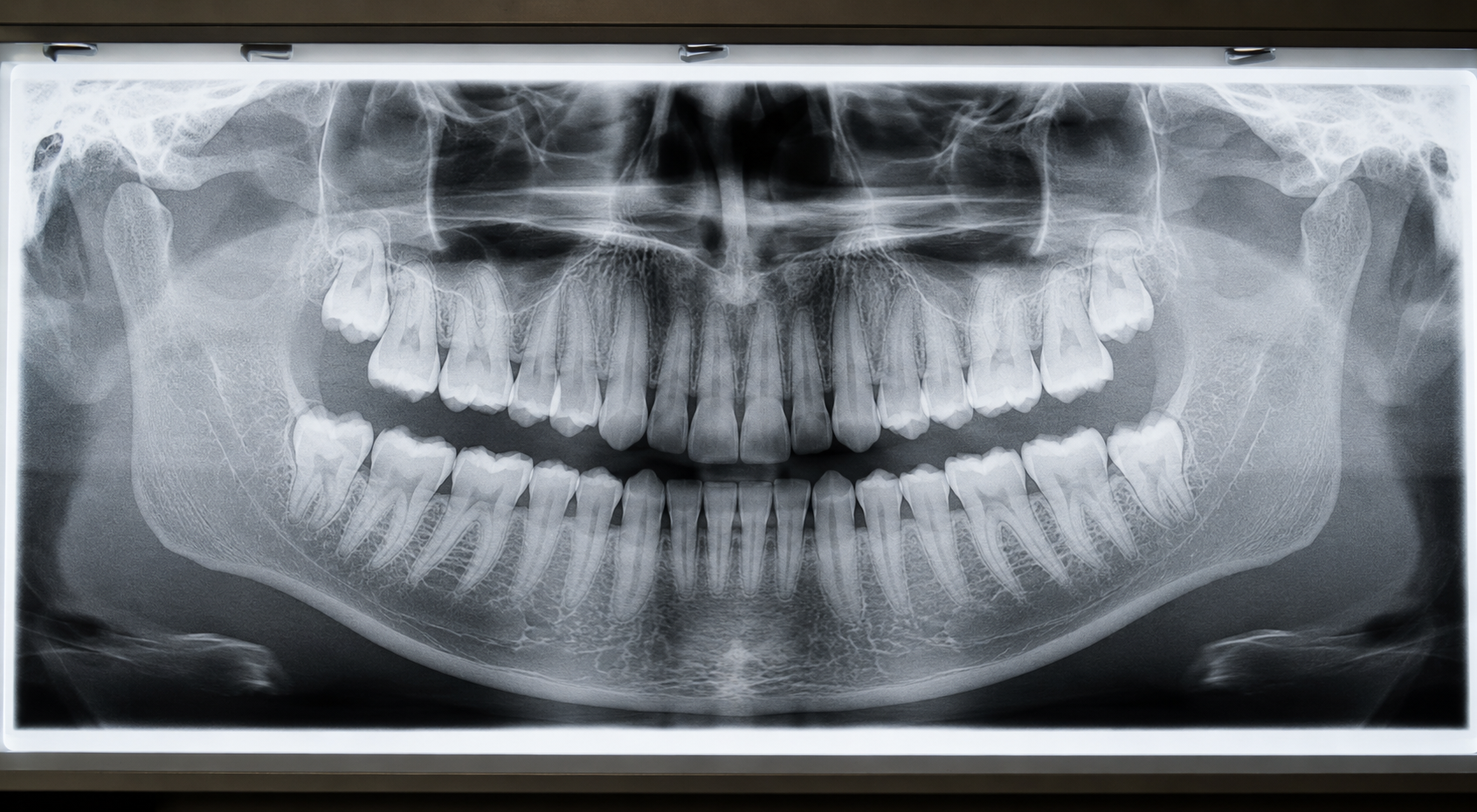
- Hypodontia: Some people are born missing one or more permanent teeth (not counting wisdom teeth). The most commonly absent teeth are the upper lateral incisors (the ones right next to the front teeth) or the lower premolars. This is usually spotted on a panoramic X-ray and can be managed orthodontically.
- Hyperdontia: On the flip side, extra teeth can appear — a condition called supernumerary teeth. The most frequent example is a mesiodens, a small extra tooth that pops up between the two upper central incisors. While rare, it nudges the count above 32.
- Tooth extraction: Cavities, trauma, or gum disease sometimes mean a tooth can’t be saved. Losing a molar or premolar is common, and dental implants or bridges can restore function, though the natural count changes.
- Edentulism: Partial or complete tooth loss becomes more common with age, but tooth loss is not an inevitable part of aging. With good care, many adults keep all their teeth for a lifetime.
The blueprint of 32 is a textbook guide, not a hard rule. A healthy, functional bite can happily exist at 28, 30, or even fewer teeth, as long as oral health is maintained. If you’re unsure about your number — or whether any missing or extra teeth need attention — your dentist can clarify with a simple exam and X-rays. In fact, dental radiographs are the gold standard for confirming your total tooth count, including those still hiding beneath the gums.
Keeping Every Tooth Healthy

Whether your smile holds 28 teeth or the full 32, the daily care drill stays the same: brush twice a day, floss daily, and see your dentist regularly. Every tooth surface — the pits, grooves, and tight spaces between molars — demands attention. A sonic electric toothbrush can be a powerful ally here because its high-frequency vibrations drive fluid between teeth and along the gumline, cleaning beyond what bristles alone can reach. Paired with floss, it helps defend every single tooth against decay and gum disease.
Simple Recap
So, how many teeth does an adult have?
- The textbook answer: 32 permanent teeth — 16 on top, 16 on the bottom.
- The everyday reality: 28 teeth for many adults, thanks to wisdom tooth removal or natural absence.
- The only count that truly counts: the one your dentist confirms, as long as your mouth is healthy and comfortable.
You’re not deficient, behind, or abnormal if your adult grin isn’t a perfect 32. Human mouths are wonderfully variable. And now, next time someone asks, you’ll know the full story — wisdom teeth and all.


Leave a comment
เว็บไซต์นี้ได้รับการคุ้มครองโดย hCaptcha และมีการนำนโยบายความเป็นส่วนตัวของ hCaptcha และข้อกำหนดในการใช้บริการมาใช้